What I Can Do For You As Your Digital Marketer

Dear _______,

It might be silly to say that everyone should start a blog (I don’t think it is for everyone) but if you think you have the slightest inkling to put your thoughts to screen then you should do it. Learn how to word your thoughts and teach others about the things that matter to you. I learned how to analyze content differently, I learned how to use my voice- I mean really use it. I learned how to write quickly and with purpose. My writing skills have improved drastically. I am so thankful for the experience and thought I would share my progress thus far.

Total word count: 13790

345 views from the U.S. 1 view from the Netherlands (I think this means I famous!)

147 visitors

Homepage 197 views

I’ve learned that your voice is one of the most powerful things that you own. You use its unique impressions to articulate thoughts, to express anger and love, to make others laugh and to define yourself.

Along with finding my voice through blogging I also learned about various topics such as SEO, A/B testing, digital analytics, html, email marketing, landing page optimization, social media marketing, inbound marketing, and the list goes on. I actually completed 3 different certifications- HootSuite, Hubspot, and Google Analytics. The experience challenging and rewarding, now leaves me feeling confident in my abilities.

Next quarter is my last quarter being a college student and I feel like I still have so much to learn and so much desire to learn. I plan to make this world my college campus, and my work will be the classroom.

As a new graduate I will have a fresh perspective… I want to talk about what I can do for you as a digital marketer. I don’t want to say it in the way you would write a standard 5 paragraph essay for a lit. class. I want to be real. I don’t always know what I am doing but I try. I try really hard. Not in one of those “try-hard” annoying kind of ways but in a hard-working-quick-learning type of way. I love to prove myself to others. I follow through when I say I am going to do something and I am 100% ready to put my career at the top of my priorities. I always keep a full plate and I have learned that I work best under tremendous amounts of pressure. Give me a task and I will figure it out, I will get it done and I will put real effort into it. If its marketing, I’m in. I love to learn about it and there is still so much to learn about it. I am ready to work somewhere with like-minded people where I can share ideas and build things. Build content. Give me a hammer and I will build a house. Give me a laptop and I will build an informative, lovely piece of content. Piece of soul. This letter was supposed to be to my future boss, or my dream employer. I don’t want to limit it to even that. This letter is for myself. A benchmark of how far I have come and a marker to look back on when I am far from here.

What a fantastic thing it is to educate yourself. I find so much worth in knowledge and I am ready- no I am at the starting line waiting for the bullet to sound, so that I can take off and follow my dreams. (Please excuse the can of cheezewiz I just sprayed everywhere)

Sincerely,

Jaclyn Celine

Google Analytics: Platform Principles

As of right now I am in training to become Google Analytics Certified! Woo hoo!

In one of my very first posts I talked about the importance of analytics. The post is short n’ sweet. Not very in depth. But it tells us the importance of analyzing. Later I posted about SEO and how it is best to combine SEO with Paid Search Advertising. I am starting to see a trend here… a Google trend. Google is one of the biggest players in the analytics game.

What is Google analytics?

It is a dashboard that tracks data and creates reports based off of the data collected. The reports tell stories about the success of your goals. Users use the tool to track different metrics and dimensions about your site/app traffic. Metrics are quantitative data and dimensions are qualitative data. The data is tracked using an SDK kit or JavaScript code depending on whether you are tracking traffic on an application or website. You can track data on any digital device that connects to the internet by sending the data to the Google Analytics platform for processing. You can even use configuration settings to better target, organize or filter data.

Understanding Basic Terms

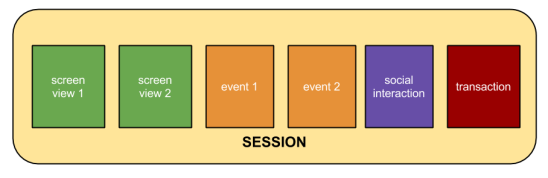
The data is tracked by users and sessions. A user is a unique visitor and  this is tacked by using a unique ID for each new user. ID’s are specific to a device but can be edited to create one ID across multiple devices. A session is a collection of interactions/hits during a given time period. Users can have multiple sessions. A session ends after 30 minutes of inactivity.

Session-Google-Analytics

Defining Goals

You use Google Analytics to track how often users complete specific actions. These are known as goals. Defining and creating the right goals for your business is very important. When a visitor completes a goal on your site or app Google Analytics tracks that as a conversion. The conversion is an action completed by a user that is of value to your business, for example a purchase, content download or newsletter sign up. Conversions are unique to your business depending on what is important to you. Google defines 5 types of goals. Below is a chart with an example of each type. Google Analytics also lets you add a monetary value to every conversion if you choose. This is a good way to put your goals into perspective and to see what is making money for your business and what isn’t.

Google-Analytics-Defing-Goals

Reporting

Most of your reporting will be done through the standard reporting interface. API’s are another reporting tool. Google gives you simple API’s to automate reporting by building an application that sends queries to the analytics interface. This can be complex and may not be right for you. You must be a capable developer to develop an application worth using. Reporting in Google Analytics is brought to you in table form consisting of columns and rows. Another consideration is reporting sample sizes. If you wish to have more concise data you will want to use a larger sample size. If you wish to have your reports calculated quickly then you may want to use a smaller sample size.

Google Analytics Certification

In just a couple of hours (under 2) I learned how Google Analytics works. After further studying I will be taking my certification exam and will be proficient in Google Analytics if I pass. The study tools and certification are both free! FREE! This is a skill that will set me ahead of my marketing peers. Analytics is engraved into every marketing process today and is such an important skill to master. If your considering a career in marketing and still do not grasp the analytic concepts or understand how to use the tools, I would recommend completing the free training and certification.

The Era of Multiscreen Marketing

As technology grows so does the range of devices we use. Marketing is challenged by a range of screens and devices to master. Comscore came out with an interesting white paper about the patterns of device usage, telling many insights into the ever changing multiscreen world. In 2013 smart phones alone surpassed desktops for internet usage taking the majority at 57% of all internet usage in the U.S. Even more is that app usage accounted for 85% of internet time spent on phones and the number of smart phone users grew by 24%. Smart phone technology had no revolutionary products in 2013 and is well into the late majority phase of the technology adoption life cycle yet the technology usage rates still has room for growth. There were still 83 million U.S. mobile users that didn’t adopt to a smart phone at the end of 2013.

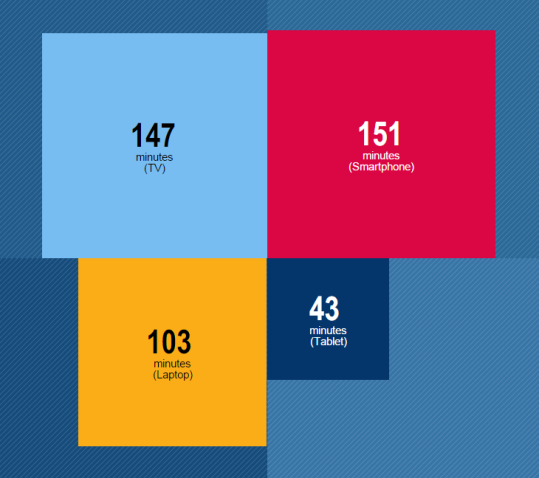
In an interactive whitepaper by Milward Brown AdReaction, author(s) have created easy to read infographics showing how people spend their time across screens. The first visual was my favorite. It shows the amount of minutes people spend on the internet across screens.

Internet-Usage-By-Time-By-Screen

Infographic by Milward Brown, AdReaction


As you can see, smartphone usage ranks the highest followed by TV, laptops, and tablets. Now that we know the importance of mobile and multiscreen marketing let’s discuss what we can do to improve in these areas.

Start with the Goal

If the goal is to optimize your website for mobile, then start there. I mean really start there. If you have already created a brand or personal website and know that your current model is working across digital platforms then this tip isn’t for you, but if your just starting out, looking for a site revamp or just need some help optimizing across screens, then listen up. Your website is your tool and multiscreen optimization is your goal, so you should start there. First create a site that is optimized for mobile and then test across different screens. If it works across screens then you have success, if not you may want to consider some other options to combine with your optimization.

EPSON scanner image

Another option is to build a responsive website. Responsive Web design is the approach that suggests that design and development should respond to the user’s behavior and environment based on screen size, platform and orientation. So as visitors come to your site, the site adjusts automatically. Automatically is the key, this means that who ever visits your site will automatically be directed to the best version of your site depending on what device they are using at that time. Many create responsive sites from desktop optimized sites- this is fine and may work great for your site- but in an article, SEO guide to creating a great website, author MOZ recommends starting with mobile then building a site to respond to desktop/tablet screens.

Building separate sites for different platforms is another option. Moz argues that responsive is better but I could see a potential for separate. With separate you would be able to optimize by each platform. This option would be the most time consuming though and could lead to a miss of brand cohesion if the sites did not match up.

Eliminate the Slow Joe

Make sure that your visitors aren’t waiting around for pages or content to load. This can cut your site traffic and conversions considerably if your site is slow. People can’t and won’t wait for slow sites when we are conditioned for fast internet travel. This means that you need to check for and eliminate lagging content from your site, or replace lagging content with fast content. Oh and Flash is dead so get rid of it!! It will bring your site down!

Create an Application

Since app usage accounts for 85% of total internet time spent on smartphones I think we could all take a page out of Starbucks’ book. They’re doing something right with their addictive app that pairs quite nicely with their very addictive drinks. The company said that on average, customers pay for a purchase using a smartphone 7 million times per week, with mobile payments now accounting for roughly 16 percent of total transactions. If your company has the potential to work well with an app then you have a great opportunity for mobile optimization.

Test Across Platforms

Don’t be the big dummie that doesnt test and make sure that your site is running smoothly and is optimized across platforms. This means you may have to borrow some of your friends’ technology products or maybe stop by the local Best buy and test your site there. Collect data by tracking the engagement of your site’s visitors across platforms and react accordingly. As you know already the optimizing process is never over. So always analyze and test to keep an engaged audience across screens.

The Future of Paid Advertising

Marketers are still trying to figure out the best way to advertise online. Outbound vs. Inbound, Sponsored vs. Native, SEO vs. PPC, what does the future of digital marketing look like? A lot of marketing firms, for example Hubspot, believe that paid advertising or outbound advertising is in the past. Other’s believe that paid is the way of the future! Paid advertising has already changed drastically in such a short amount of time. More and more money is being pumped into online marketing, and less and less is being pumped into other more traditional media outlets. Digital marketing spend is predicted to increase by 35% of total budgets by 2016.

The debate is on. But who is right? What does the future of paid advertising look like?

I cannot answer this question definitively, but I can sure as heck give you my two cents on the topic. First we should discuss Native Advertising and Programmatic Ad buying. Automation advertising company Sharethrough defines native advertising as a form of paid media where the ad experience follows the natural form and function of the user experience in which it is placed. To explain further, the ad flows with the content. The ad actually looks and acts like content. Depending on who you are, you may or may not like this idea. Think of it like this: your reading a blog about how to bake the perfect muffin. On the side of the screen you click on a link (ad) to a recipe for a strawberry rhubarb muffin that you would like to check out. The content is great! You decide to make the recipe. After buying the ingredients and getting ready to start, you open up to the page of the recipe and realize that the content was actually provided to you by a local flour company, let’s call the company Flour4U. Would you be outraged in their attempt to advertise to you in this fashion, because at first glance you didn’t notice that the recipe was an ad? Or would you be delighted that a company could create such compelling advertising content that you almost didn’t notice who it was from? This is the issue with native advertising. Transparency. This is the issue with a lot of today’s marketing efforts. This leads me perfectly into how I see the future of successful paid advertisements. Reputation is everything. If you or Flour4U is not clear in letting readers know that the content provided is in fact an advertisement then shame on you! In this podcast episode of StartUp by Alex Blumberg, you can hear about a real life native advertising “no-no.” The start up company was looking to gain sponsors and was not clear about its intentions. When your not clear or transparent and something goes wrong (mistakes happen!) then your reputation is going down and your reputation is the best thing you have going for you. I think that native advertising will need to be less sneaky and more transparent in order to hold any long-term success for the future. This may completely change it’s meaning, but I think that good content is still viable. A completely different type of advertising known as programmatic ad buying, is another big trend right now. But what is it?

I mentioned the company Sharethrough earlier when I gave the definition of native advertising. Sharethrough is actually an automation advertising firm. Automative advertising and programmatic ad buying go hand in hand because they are both based on automation. Programmatic ad buying is using software to purchase your ad space for you, often through a bidding system opposed to the traditional forms that require human interference. Basically a computer is buying your ads for you. If you are still not grasping the concept, below is a video explaining programmatic ad buying to an eight year old.

Trends come and go, fast. Especially in the world of digital marketing. Project Runway host Heidi Klum says it best “One day your in, the next your out.” That is why it is important to hone in on the things that do work for paid advertising and ditch the things that don’t. As far as programmatic ad buying goes, I see a huge future for this trend. Automation or computerized systems make things a lot easier and if you know anything about digital marketing you know how stressful it can be. Programmatic ad buying allows you to buy ad space in real time- which is huge! The bidding process for an online ad space happens so quickly, the bid can even go through multiple intermediaries and it still only takes about 1/10th of a single second. Crazy right. These intermediaries for example, DoubleClick by Google rake in some solid profit. Sometimes 45 cents of every dollar spent on the ad space. There are so many things to keep track of and new marketing tools and opportunities keep popping up left and right which can make it difficult to truly master the skills. Anything to ease the paid advertising buying process in this day and age is really going to take off. Especially a system that supports a function that does not necessarily need human input. I think that it is important to step in when needed and to always double-triple check your programmatic system for bugs or mistakes often. Make sure that who you are buying from or your middle man is a reliable and reputable source!

So it really comes down to transparency, reputation and support systems. The future success of paid advertising will depend on the transparency of your company, your company’s reputation and your company’s ability to keep up with the ever-growing number of support systems.

Coding is For the Wise Marketer

Coding gives you the power to create. It is what lies behind our digital marketing design. Understanding the vast possibilities of coding gives you the ability to see through the eyes of the technical guy and the marketing guy. You no longer have to bridge the gap of knowledge because you now understand. If you can speak with your coders in the same language that they use (HTML) communication is smoother, creativity is heightened, and both of you are now on the same page. You have the power to create, edit and help construct your ideas. A coder creates a vision that you envision. There is often something missing when someone else is creating your vision. If you understand their language they will most likely respect you more and try and understand your language.

HubSpot seems to agree with me when I say that coding is a great skill for the modern marketer to keep in their toolbox. Just because it might not be on your list of duties it is very beneficial to have an understanding of it.  HubSpot brings up a great point about learning to code. If you learn how to code you can understand the limitations and possibilities of code. This will make it easier for you to find the right coder to help you complete the job because you will know the skills needed for the task. You will no longer have to rely on other’s knowledge to see your campaign reach the screen.

<h5> Codecademy </h5>

As someone that knew near to nothing about coding, I have to say that Codecademy was a great way to learn some of the basics. The online academy is easy to navigate and makes learning the code not so bad- actually quite interesting. The free interactive course covers the basics of HTML and CSS (did I mention it’s free?!). I recommend this course if you are looking to start learning  code somewhere, its a great place for beginners to grasp the basic concepts.

<h5> Html & CSS </h5>

HTML (Hyper-Text Markup Language) coding is used for creating content and webpage structure. CSS (Cascading Style Sheet) is used for webpage presentation and design. The two combined create the sites that you browse everyday. In the header above is an example of how you could enter a header using HTML coding.

HTML is used to define the structure and basics of the website. HTML defines:

  • Titles, headings, lists, text, images, etc.
  • Hyperlinks
  • Position and size of site logo, menus, sidebar, and content
  • Video clips, sound clips, spreadsheets and other graphics/applications
  • Forms for conversions

In the late 90’s people were starting to see a problem with coding solely with HTML. It was timely and coders would have to repeat code tags over and over again just to make sure the site had the same font throughout. Coders discovered that they could ease the site creation process by creating a CSS file that held the basic design elements that you wanted to implement to your site, like layout, fonts, and colors. The file would be used as a tool for your site to reference for the basic presentation elements of your site. If you decide to change an element of design you simply edit the one file and the design will be changed throughout your entire site. Without CSS there would be more errors, much longer code, the editing process would be extremely tedious and cohesion across a site would be much more difficult to accomplish. CSS focuses on the style and theme of the site while HTML focuses on the content and details.

<h5> Whats Next </h5>

Times are changing fast. What’s next for coding?

According to Moore’s Law the number of transistors that can be squeezed onto a semiconductor chip of a given size doubles roughly every two years . This means that computers are constantly getting better and faster, very quickly! This has held true since the 1960’s. But what does this actually mean? What forms of computing are on the horizon?

In the 1950’s-60’s scientists Boris Belousov and Anatoly Zhabotinsky discovered a class of chemical reactions, known as “BZ reactions.” These chemical reactions oscillate (fluctuate) over time. This led to the paradigm of chemical computing. Andrew Adamatzky at the University of the West of England, in Bristol, built on Belousov and Zhabotinsky’s work. In collaboration with his colleagues, he developed a way to excite BZ reactions with silver halide ions and control the propagation of chemical waves with light. From this the scientists were able to carry out basic chemical computations by making separate wave fonts interact with one another. Woah. I know that this is a lot to understand (trust me I had to look a few things up myself) but the science is intriguing. If you think about it the parallel between computing and chemical reactions is obvious. An input goes through a transformation and then becomes an output. Although this discovery is quite big, the computing is still very slow. But if Moore’s law stands true, then maybe the process of chemical computing will become faster as scientists push to accelerate the process.

Screen Shot 2015-02-24 at 8.18.09 AM

Another interesting type of computing is wetware computing. Wetware computing is based off of the principles of nature. A cell is a representation of the computer and DNA provides information storage. RNA represents input, ribosomes do processing, and proteins form the output. Again the parallels are obvious, there is an input, transformation and then an output. In this model the details even provide similarities. It is interesting that we didn’t base computing off of this model from the get-go since nature has been using this model for billions of years. The model has a great potential but for now the cells are often too hard to program. In 1999 biomedical engineer William Ditto, along with his colleagues used the neuron’s of a leech to create a simple cell computing system.  He eventually stepped away from computing with cells but learned valuable insights from his research that he now uses in his own business. He found that cell computing was very sensitive and chaotic which at first looked like a negative. When he dived a bit deeper he realized that this could be used to his advantage. He spun off this discovery into a high-security chip company called ChaoLogix.

The future of computing is still unknown. But the possibilities are getting weird.

Combine Paid Search with SEO for Best Results

In my last post I discussed ways you can start optimizing your site’s search engine presence. In this post I am going to dive in a bit deeper and discuss the benefits of combining organic and paid search efforts.

Paid Search (PPC)

The most popular type of paid search, PPC marketing as defined by the online marketing firm, WordStream is as follows “PPC stands for pay-per-click, a model of internet marketing in which advertisers pay a fee each time one of their ads is clicked. Essentially, it’s a way of buying visits to your site, rather than attempting to “earn” those visits organically.” This means that you are only paying for ad space that results in a click. This is the model that Google Adwords follows. It is so popular because the bid-style PPC is fairly low-cost, yet effective. You can also pay per thousand impressions but this model usually fits a specific type of campaign, like one to raise awareness instead of conversion.

Where to begin

Start by perfecting (well as close to perfect as possible) your SEO strategy. This will make it easier for you to begin your paid search campaign because you will have keywords already in place as well as a better understanding of SEM (search engine marketing). It is also smart to start with your SEO strategy because it can build better credibility, visibility and recognition. According to an ebook by HubSpot the 3 main elements of a paid search campaign is keywords, ads and landing pages. So after perfecting SEO and keywords make sure you have developed some awesome landing pages for your traffic to go to after they click on your ads. A great part about paid search is that you have the ability to optimize your landing pages using A/B testing. You can send some click through traffic to one version of a landing page and the rest of the traffic to another, then track the success of both and adjust accordingly.

Why Use Both Paid Search and Organic SEO

The combination of paid search and SEO yields best results and in this blog the author gives 4 simple, yet compelling reasons why.

1. Organic rankings are unpredictable.

Organic rankings are ultimately determined by Google’s ever-evolving algorithm, no matter how much time and effort you put into optimizing your site for organic search the results you are looking for are not guaranteed. Paid search makes sure that your site is seen.

2. You earn twice the visibility.

I decided to do a small test to see if I could catch other businesses in the act of combining SEO and paid search. I Googled “running gear” and here were the results.

Screen Shot 2015-02-19 at 5.20.50 AM

To no surprise I immediately found an example by roadrunnersports.com. In red I circled the paid search result and in blue I circled the organic search result. I then scrolled down and found that Under Armour had also appeared twice. With search space on the first page being so valuable, double visibility is like gold. In a blog post by MOZ, the author looks at studies done in the past to measure the click throughs of search results on the first page versus other pages. The results vary depending on study but still show insight into how important the first page of search results really are. For the latest study performed by Caphyon, results show that 71.33% of searches lead to a click through from the organic results on the first page. Even more startling is that on the first page alone, the top 5 organic results make up 67.6% of click throughs. This means that results 6 through 10 only account for 3.73% of clicks. Just remember that the results do vary by study or by search.

3. You can increase your click through rates.

This seems obvious but combining SEO and paid search will increase your visibility which leads to more clicks which hopefully will lead to the final goal: increased conversions.

4. You can increase your chances of conversion.

If you want to increase your conversion rates, paid search is a great way to create more potential leads. You get to optimize your landing pages and often surpass the rankings of your competitors. Your paid search traffic can help you boost your organic search rank as well. More traffic to your site means more chances for conversions.

Measuring Success

Luckily Google has great tools to help you measure the success of your paid campaigns. The Adwords tools are easy to use and provide you with most of the metrics that you need to understand how your campaign is doing. Make sure you are watching your click through rate, conversion rate, cost per click, and cost per acquisition. Also check out your quality score by looking at your keywords under keyword analysis. There, keywords are rated by Google using a 1-10 scale. Google’s definition of a quality score is an estimate of the quality of your ads, keywords, and landing page. Higher quality ads can lead to lower prices and better ad positions. The score is measured by how relevant your ads and landing pages are to the user.

Never forget to keep optimizing wherever possible. Don’t miss out on site traffic, combine a successful SEO strategy with a well thought out paid search campaign for the best results.

SEO for Beginners

Everyone is yelpin’ and hollerin’ about search engine optimization. But what exactly is search engine optimization and how does it benefit me? SEO (search engine optimization) helps you get your site seen. To be exact, SEO refers to the practices in which you undergo in an effort to increase your sites traffic specifically from search engines. It also encourages great content from creators and content that is tailored to solve the problems of the searcher. In this post I am going to focus on what you can do right now to optimize your sites, simple ways to raise your search rank and pull in more engaged visitors.

The best part about search engine optimization is that anyone can do it and the costs are low or free. You can of course spend money on different SEO tools which can really help you or your brand site build traffic and ranking on the major search engines. The 3 major search engines used in the U.S. are Google, Yahoo, and Bing. Yahoo and Bing are both owned by Microsoft. Search traffic is so valuable because the first place people go for information is to the search engine. In this beginners guide to SEO, MOZ goes over all the details to beginning your SEO journey. MOZ recognizes 3 types of searches. The “do” searches account for searches that are of a transactional nature. These searches include queries such as buying a cake or watching a specific music video. The next kind of searches are the “know” searches, searches prompted because of a need for information. These searches might be a need to know what time the sunset starts or Argentina’s capital city. The last kind of searches are the “go” searches. These are navigational and used when a searcher is trying to get to a particular site such as the Facebook or Amazon home-pages.

Coupon guru Groupon conducted a short experiment to measure the impact of search engine traffic. The experiment lasted only 6 hours and was achieved by deconstructing the site. Groupon recorded that approximately 60% of their site traffic was derived from search engines. Although Groupon’s well established stature in the mobile/web based market may not relate directly to your small cake shop’s website or your everyday blog there is still a possibility that this statistic is close to or not far from that of your own.

This means that possibly 60% of your site traffic is derived from search engine usage.

SEO’s importance to increasing your site traffic is evident, but where does this put you? What do you do now?

Understand Your Ideal Searcher

I know that you are still wondering how you can optimize your sites easily and effectively. I found a bit of insight from this article from USA Today which focuses specifically on SEO for Google. The article talks about 5 ways to improve your search rank and presence. The first being to understand how the searcher searches and to use the same language when creating your site content. For example, if you were the owner of a cake shop in Portland, Oregon you might want to make sure to have the words “Cake” and “Portland” clearly stated in your site. Location is especially important for small businesses. When you understand your ideal site visitors needs you can better assist them via SEO and create more site conversions. You can also make sure that you understand and know how to use the following terms:

  • Keywords: when search engine crawlers are reading through your website content you want to make sure to have key search terms scattered throughout your site. This goes along with knowing your audience and making sure to use keywords authentically, this means no forcing in keywords unnecessarily. A great way to find the keywords that are actually worth using is by checking out the keywords that pop up on your Google Adwords. You can input your site url to see which keywords come up without paying for anything.
  • Titles: make sure to use titles with keywords and font hierarchy. This makes it easier for crawlers and searchers to understand and organize your content.
  • Content: in order to pop up in your ideal audience’s search results you need to create content that provides value. This is content that makes readers want to share with others and if your content is being shared then your rank will go up.
  • Link: adding links to your pages creates more visibility to your site. It also adds value to your traffic’s visit. Getting others to link your content from their sites is like SEO gold. A big ‘no-no’ is link buying and if you are caught by Google your rankings will suffer immensely.

Dilbert-SEO-Cartoon

Create a Blog

Creating a blog is a great way to engage your audience and optimize your search engine rankings. You can add links from your website and social media sites to create more traffic and brand awareness. Post often and create content that is of value to your audience. Valuable content naturally ranks higher on search engines than half-assed content no matter how many keywords are spewed throughout.

Another simple and easy way to optimize is by always adding tags, links and categories to all of your website posts. For example, if you were the cake shop owner that posted a pumpkin spice cookie recipe on your blog sometime in October and then shared the post through your social platforms adding links and tags like “Cookies” “Recipe” “Pumpkin-Spice” “Halloween Cookies” will help searchers find your sites easier while simultaneously increasing your SE rankings.

Analyze and Measure

Again I must stress the importance of tracking your SEO efforts. How will you know if your efforts have been successful if you are not tracking and measuring them? A few simple numbers that you should track monthly are:

  • Direct Navigation: this is traffic that comes directly from typing a url into the navigation bar, bookmarks, email links and untraceable links.
  • Referral Traffic: this includes traffic that comes from links on other sites, social media posts, promotional, and other trackable links.
  • Search Traffic: this is traffic that comes from any search engine small or large.

You can use these metrics to compare and analyze your current SEO processes. You can then find better ways to appeal to your traffic and increase your rank. You can find other great advice for SEO metrics on this blog by Positionly.

Constantly Improve

You wont see results right away. In fact, your SEO efforts may not see results for a very long time. Repeat these efforts to always stay on your SEO game and eventually your hard work will pay off and you will start to reap the benefits. It is good to constantly look for ways to better optimize your SE presence. Link building is another important skill to keep in your tool-box and here is the next guide you should check out by MOZ.

7 Tips to Improve Your Email Marketing Efforts

Practically everyone has experienced first hand the uninvited annoying spam email. The subject line says ==> $$$ WINNER! Open to claim your f r e e prize! or something else gimmicky, along those lines. The emails were frequent and noisy, taking up room and cluttering your inbox. These spam emails have brought down the standards of email marketing for years. Many have given up on the use of emails because of these gloomy standards set by amateurs and scammers. But now technology gives us the ability to filter out these annoying emails. You now have to earn a place in the inbox of your consumer or lead which means you must create personalized, specific, content for your readers. Spam has killed the image of email marketing but this does not make it ineffective. Email marketing is still a very effective way to communicate with your customer or lead. You have a direct channel of communication that is practically costless to use.

Now you need to learn how to send the right emails to the right people.

communicationcomic

1. Identify a goal. Your emails should be short, consistent and to the point. Nobody wants to read a page long email about the benefits of your brand of yoga mats. People want the information they need in a couple of lines at the top. Pick a specific goal like, “To inform my leads that our premier brand of yoga mats is on sale for a limited time.” Now make sure to stick to that one goal in your campaign.

2. Don’t be afraid to add flair. Add variation and personalization to your emails. In a statistic from Hubspot, personalized emails see 14% higher click through rates and 10% more conversions. A way you can do this is by segmenting your email list into smaller lists to allow you to personalize from there. You can also add personal flair by sending the email from an actual person’s email and not just your company name. When the email is just from the company it may not seem personal or it may seem computer generated. Another way to avoid the robot-email-look is to address the reader by their first name and use ‘You’ language to let the reader know that you are talking directly to them.

MailChimp-Logo3. Keep the emails professional. Use tools like Mailchimp, iContact, and Aweber. These are email creation tools that are very helpful when creating a clean and professional email campaign. Be sure to shop around because there are even more tools out there and depending on your brand you may prefer one service over another.

4. Create content for your readers. It is good to let readers know about your promotions or send out special offers but it is even more important to provide your leads with substantial content. A good email does not ask a lead to do anything, it provides the lead with something of value. For example, if I owned a yoga studio something I could do for my customers or leads would be to create a short at home yoga video and send it to my list. This would be low cost, easy to do and provide content of value.

5. Make sure that your emails are optimized on all devices. According to an EmailMonday (email marketing firm) blog post, 48% of emails are opened from a mobile device as of January 2015. This means you need to make sure to check before you send! Even if you have to send yourself a copy of the email before sending it out to your list.

6. Be aware of where your lead is in the buyer’s journey. Send content that follows the buyer’s journey. Think about who your lead is and in what stage of the journey they are in. If your lead is in the awareness stage you will want to send out easily consumable content like videos or e-books. If your lead is in the decision stage you may want to politely get in their face with a free trial offer or product demo. You can use your best judgement, just be aware.

hs_buyers_journey

Stolen from Hubspot

7. Offer a way for readers to manage their subscription preferences at the end of every email. This is my favorite tip from this article on how to combat the email fatigued. This is important because not everyone wants to receive two emails a day about your yoga studio or yoga mat sales but also may not want to be completely cut out of the loop. Giving readers the option to opt out of your emails all together, occasionally or just sometimes will make sure that they are taken care of whilst making sure that you don’t miss out on potential customers.

My last bonus piece of advice is to make sure and follow up! It is good to send a follow up email making sure that the reader received the first email. It shows that you care and covers your bases.

How to Land the Perfect Landing Page

It seems like a lot of companies are missing the point of click through traffic. They think that once they direct prospects to their site that their work is done. This is just not true. The journey of turning those prospects into loyal customers has just begun.

Let’s start with the definition of a landing page according to the Hubspot Academy, a page to convert unknown site visitor’s into known leads. Hubspot stresses this definition because many companies tend to get distracted and forget the real goal of the landing page, to convert visitors into leads! Hubspot says that your landing pages are sales reps that work 24/7. This is your opportunity to gather information from your visitors in exchange for something that is of value to them. For example, a mountain gear site may offer you a free e-book on mountaineering if you enter your name and email or a yoga studio site may offer you a free class in exchange for your name, email and address. These are examples of exchanges that benefit both you and your site visitors. These exchanges will build your customer and lead base. Don’t waste earned clicks with a stale homepage. Use the clicks to learn more about your prospects and win them over.

The Headline

You want the headline of your landing page to be attention-grabbing, simple and bold. To emphasize your headline further you want to eliminate any extra clutter such as noisy ads, unnecessary copy and messy site design. In an e-book by Copyblogger, authors state the most important factor to an affective headline is to make sure it refers directly back to the place from which your visitor came or the ad copy that drove the click. Nobody likes to click on a link and then be redirected to a page that has nothing to do with the link. Tricking the customer is the last thing you want to do. You want to have different landing pages for different customers with different headlines. Your site traffic is full of unique individual visitors. Just like your unique visitors you want your landing pages and headlines to be unique to the visitor. You want to make sure that your headline relates back to your conversion goal. If your headline does not relate to your goal you may be missing out on leads. A lot of your traffic may not read more than the headline so you want to make sure that it is to the point and memorable. Lastly, make sure to assume nothing, and test everything. A/B testing your landing pages is a great way to make sure you are getting the most out of your headline.

The Content

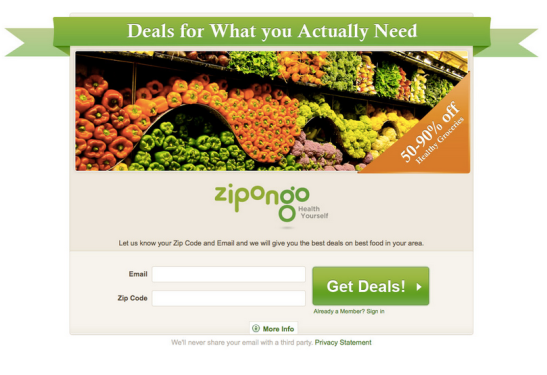
Since impressions don’t pay the bills, what you put into your landing pages is very important to your company. You want to make sure that your content is working towards your goal, not against it. This means that any extra content that does not relate to your conversion processScreen Shot 2015-02-02 at 9.30.57 PMshould be cut from the page as not to distract or take away from the conversion. You should always insert the most important information at the beginning and end of the page and always have a call-to-action in place. You want to tailor your messages to the customer and make sure not to talk to everyone the same way because different things appeal to different people. Be sure that your exchange offer is strong enough to convert the unknown visitors into known visitors. Above, is an example of an affective landing page I found from this blog . The site offers healthy recipes, meal planning tools, and grocery deals near you. This site keeps the landing page simple with a clear call to action. There are visuals and an incentive to draw the consumer in.

Measuring Success

Referencing back to the e-book by Copyblogger, there are 3 key metrics that you need to know in order to measure the success of your landing pages. The first metric is a conversion rate. A conversion rate is the percentage of page visitors that results in a lead, sale, or another desired outcome. For a site focused on sales, a 1-2 percent conversion rate is around average and for a site focused on lead conversion, a 5-6 percent conversion rate is seen as average. So how do you go about tracking a conversion rate? That boils down to your analytics package. Your site provider may offer some analytics tools or you can use an outside analytics provider to assist you.

Next, you should track how many visitors actually stay on your site, or how many leave shortly after arrival. This is known as the home-page abandonment rate or the bounce rate. It is the rate of visitors that leave after entering  your site without clicking on anything. This rate may not be of any use to a blog page because a blog can be read without clicking on anything else but the link to get there in the first place.

The last key metric is the cost per sale. This is measured by dividing your advertising costs by the amount of sales generated by these costs. This is important because you want to make sure that your marketing efforts are effective.

Now that you have learned how to land the perfect landing page, you must remember that the process is never over! In order to keep your site fresh and competitive you must commit the time to constantly analyze and optimize your landing pages.

No Selfies: Building a Professional Network on LinkedIn

“You are the CEO of brand ME inc.” –Hootsuite University 

In my last post I went over 4 ways to engage your customer through social media. In today’s post I want to get more specific. According to the site mission statement, LinkedIn is a professional social network that focuses on connecting the world’s professionals to make them more productive and successful. When you join LinkedIn, you get access to people, jobs, news, updates, and insights that help you be great at what you do. This social network is a great tool to establish your company or personal professional brand.

Where should you start?

Start building your personal profile first. This will give you a feel for the site and give you the company brands first connection once you start creating a company profile. If you don’t have a business to promote then practice promoting yourself. Get yourself out there!

It is all about being professional. So this means no selfies.

selfie

Your professional profile should exude class and excellence. This is your chance to showcase your best skills and abilities as well as your most professional photo. Your profile picture should be a headshot. Unless you are an artist and want to make your profile picture abstract or your a yoga instructor and choose to pose in your photo then you better make it clean, simple and clear. Please avoid using your mirror as a photo taking tool. If you are choosing a profile picture for your business it is always best to use your logo to be clear about who you are.

Second, make sure to fill out all of your profile contact information. LinkedIn is used specifically for networking and potential employers will use this information to get a hold of you. The information is private to the public until you approve a connection. Make sure you have your email address, phone number, physical address and website(s) under your contact information. You can also customize your LinkedIn URL when editing your profile. This will make it easier for people to find you when searching for you on Google.

When setting up your profile make sure to summarize your passions and skills in the about section. If you are a business then write a brand story in the about section that holds an emotional appeal. This section should be about a paragraph in length and it is important to use key words that will spark the interest of your target audience. It helps to create target audience personas to fully understand the likes and dislikes of your potential customer, employer, or connection. If you are not familiar with what target audience personas are, check out this blog post by Kevan Lee.

Be sure to fully fill out the education, volunteer, and work experience sections of your profile. Since LinkedIn is like an online resume, these sections are extremely important.

Follow influencers, brands, and groups that align with the interests of you and your target audience. By doing so you will be exposed to posts that will be beneficial to you and you will have the opportunity to enter relevant conversations with others. It also shows others that are looking at your profile what you value and that you are joining in the community.

What should you post?

You want to impress others with your posts. Share content that others will want to engage in or read. If you are a business it is often smart to develop a content calendar to organize when and what you are posting to best optimize your social presence. Many people that are on LinkedIn are there for credible content. Users like to learn and read about current developments in their industries, they like to be on the ball with what is going on and they want to communicate with others that are on top of these current events as well.

According to Andrew Kaplan from LinkedIn, there are 3 types of content that you or your business should post via LinkedIn. The 3 types are unique, linked, and sourced content and you want to find a healthy mix of all 3. The unique posts include content like blog posts, company videos, webinars and white papers. The linked content is content from a 3rd party. You can share important industry news or 3rd party research for your audience to enjoy. Sourced content is content that you or your customer’s create. This can be informational polls, follower preferences, testimonials or a popular one, product tests.

It is always good to ad a call to action to encourage sharing and participation. Ask questions that will elicit a response and be active in comments. Also if you receive positive feedback from a customer via LinkedIn it doesn’t hurt to ask for a product or service reccomendation.

How do you know if you have created an effective profile?

This goes back to Analytics. Measuring the effectiveness of your site is a great idea because it gives you the opportunity to improve. After you have set up a solid site it is a good idea to create some SMART goals. Some goals you could have would be to generate more leads from your linked in profile. You could measure this by monitoring the number of clicks you get to your website from LinkedIn. Then adjust accordingly to see if you can increase this click through rate by providing great content to your connections or followers. Make sure that you are tracking metrics that matter to you and your goals. Some suggested metrics to measure include impressions, engagement rate, lead generation and follower conversion. You need to find out what metrics will be best to use for your goals.

The key to knowing if you have created the perfect profile is that you haven’t. You are never done optimizing your professional online presence and should always be looking for new ways to engage the audience. Now if you are a professional and still don’t have a profile set up on LinkedIn I challenge you to go create one now. Employers are using this tool to hire. Don’t miss out!